

Indonesia Charts Solar Led Transition to Compete for Global Climate Capital, AESI & IIPC Held Forum in NYC Climate Week

Tessal Febrian, Director at the IIPC New York, emphasized that Indonesia’s investment incentives can play an important role.

Mada Ayu Habsari, Chairwoman of AESI, talking about 100GWp target is a direct working mandate, and the opportunities are already open for investors right now
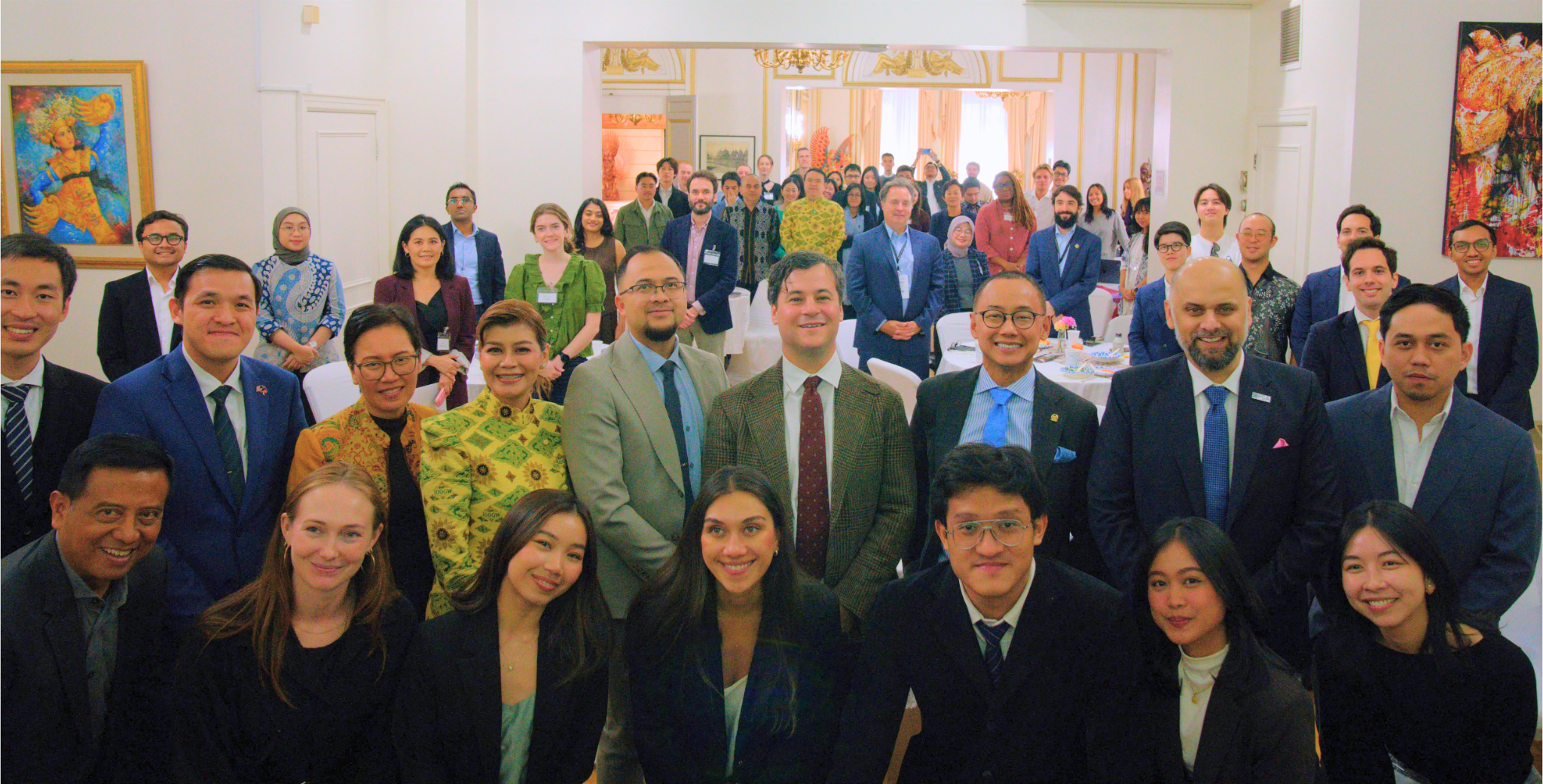
Group photo of the speakers, moderator, representative of the Consulate General of Indonesia in New York, and participants at the Indonesia Solar Investment Forum, held on September 24, 2026.
AESI and IIPC New York provided a platform for dialogue among policymakers, global investors, financial institutions and international development partners.
Recognizing that this ambition requires cross-sector collaboration, the Asosiasi Energi Surya Indonesia (AESI) and Indonesia Investment Promotion Center (IIPC) New York, together with strategic partners Tenggara Strategics and SANARA, convened the Indonesia Solar Investment Forum 2026. The event took place on September 24 at the Consulate General of the Republic of Indonesia in New York, as a parallel event during Climate Week NYC.
Through the forum, AESI and IIPC New York provided a platform for dialogue among policymakers, global investors, financial institutions and international development partners. Discussions addressed the challenges of funding solar energy, connecting investment opportunities with capital, and developing partnerships to accelerate solar deployment across Indonesia.
Mada Ayu Habsari, Chairwoman of AESI, emphasized that the national solar target relies on global partnerships to succeed. "The 100 GWp target is a direct working mandate, and the opportunities are already open for investors right now. We have utility scale projects like the Mentari 1 and Mentari 2 programs offering 2.7 GWp, alongside immediate rural electrification tenders targeting over 600 villages next year. We are actively seeking global partners to mobilize private capital at scale and turn these concrete pipelines into reality." says Mada.
Strengthening Project Economics and U.S. Investment
Panel discussions examined how Indonesia can position its solar energy portfolio as a competitive investment opportunity in the global market. Topics included project economics, regulatory certainty, technology trends and the conditions international investors need before committing funds. The discussion connected Indonesia’s development priorities with the commercial requirements of investors comparing opportunities across emerging markets.
For developers and financiers, that means connecting renewable-energy potential with credible project preparation and clear incentive. Tessal Febrian, Director at the IIPC New York, emphasized that Indonesia’s investment incentives can play an important role. Through the Indonesia Investment Promotion Center (IIPC), investors can better understand the incentives and facilitation available for priority investment opportunities, including renewable energy. By reducing uncertainty around the investment environment and highlighting available support, these incentives can complement the commercial fundamentals that investors assess when deciding whether to develop or finance a project.
“We recently implemented Government Regulation No. 28 of 2025, which is specifically designed to streamline business licensing, accelerate industrial development, and enhance investor services. Indonesia also provides fiscal incentives to support green investments, such as tax allowance, import duty exemptions, and super tax deductions. At the same time, we recognize that solar policy will continue to develop as the market grows.”, Tessal said.
Mario Masaya, Vice President at the US-ASEAN Business Council, brought the perspective of U.S. businesses evaluating opportunities in Indonesia and the wider region. His remarks addressed the enabling conditions for private-sector participation, including regulatory clarity, public-private engagement and connections with local partners.
“For U.S. businesses, Indonesia’s solar ambitions create opportunities across technology, infrastructure and services. Clear policy and continued public private dialogue help companies understand where they can collaborate with local partners,” Masaya said.
Driving Connectivity in the Solar Energy Ecosystem
Strengthening the solar ecosystem requires direct connections between project developers and the institutions that fund them. Alongside the panels, the forum included dedicated one-on-one business consultations with AESI and the Indonesia Investment Promotion Center (IIPC) New York. These sessions provided a setting for investors to explore project needs, investment conditions and partnership opportunities directly with Indonesian representatives.
The discussions connected the financing agenda with the capabilities needed inside Indonesia. A stronger project pipeline depends on collaboration among government, developers, technology providers and financial institutions, as well as local capacity to build and operate projects. Bringing these actors together can help identify commercial and technical requirements early and improve the readiness of projects for international investment.
By connecting policy dialogue with practical investment matchmaking, AESI, IIPC New York, and its partners highlighted the work needed to turn Indonesia’s solar potential into a credible, bankable pipeline. The priority is to translate investor interest into projects that expand renewable-energy capacity while strengthening the domestic industry needed to sustain deployment at scale.
END
About SANARA
SANARA (Sustainability Network of Nusantara) is a global network connecting Indonesian sustainability stakeholders with international partners, investors, and institutions to advance Indonesia’s sustainable development and climate agenda. SANARA facilitates dialogue, knowledge exchange, and strategic collaboration across the public, private, and international sectors, with a focus on translating Indonesia’s sustainability priorities into meaningful partnerships and investment opportunities.
About AESI
The Indonesia Solar Energy Association (AESI) is an industry association representing solar energy sector stakeholders across Indonesia. AESI works to accelerate the development and adoption of solar energy through policy advocacy, industry collaboration, market growth, and the deployment of solar power across utility-scale, commercial, and rooftop segments. Through engagement with government, industry, investors, and other stakeholders, AESI supports the development of a competitive and sustainable solar energy ecosystem in Indonesia. As Indonesia accelerates its renewable energy transition, AESI members are at the forefront in shaping policy, building partnerships, and growing their businesses.
About IIPC New York
The Indonesia Investment Promotion Center (IIPC) New York office is the official representative of the Indonesian Ministry of Investment and Downstream Industry / Indonesia Investment Coordinating Board (BKPM) covering the American continent (North America, USA, Central America, Latin America, and the Caribbean). BKPM develops strategies to improve an end-to-end service for investors. The team will assist investors from exploring business opportunities in Indonesia, obtaining investment licenses and incentives, and carrying out the construction stage to finishing the commercial operation stage. As the main link between business and government, the ministry is responsible for creating a conducive investment climate in Indonesia
Denaya Karenzi
Sanara Indonesia
+1 929-714-4148
denayakarenzi@gmail.com
Visit us on social media:
LinkedIn
Instagram
Legal Disclaimer:
EIN Presswire provides this news content "as is" without warranty of any kind. We do not accept any responsibility or liability for the accuracy, content, images, videos, licenses, completeness, legality, or reliability of the information contained in this article. If you have any complaints or copyright issues related to this article, kindly contact the author above.
